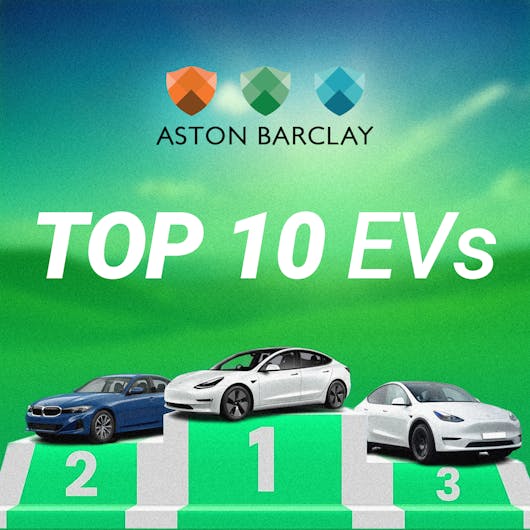
At Aston Barclay, we are excited to showcase the electric and hybrid vehicles that are leading the market in February 2026. As more drivers continue to embrace cleaner, more efficient vehicles, EVs are proving that sustainability can be achieved with performance, design, and everyday practicality. From compact city cars to spacious estates and SUVs, here’s a closer look at the top 10 best-selling electric and hybrid vehicles this month.
10. Audi Q4 e-tron Estate (Electric)
In 10th place is the Audi Q4 e-tron Estate, a new entry on our EV leaderboard. Audi’s fully electric estate-bodied electric vehicle offering a practical blend of spacious design and zero-emissions driving, with seating for five and a generous boot space that suits everyday family use. It features an all-electric powertrain with a battery around 63–82 kWh and a real-world range suitable for daily and longer trips, alongside modern tech and comfort features typical of Audi’s premium EV lineup.
9. Nissan Leaf Hatchback (Electric)
Moving down to 9th place is the Nissan Leaf hatchback. A pioneering all-electric family car that blends practicality with efficiency, offering a choice of battery sizes with up to around 386 miles of range on the largest pack and rapid charging capabilities that make it suitable for both city and longer trips.
8. Peugeot e-Expert Standard (Electric)
Another new entry this month in 8th place is the Peugeot e-Expert Standard, a versatile mid-sized electric van offering a choice between a 50kWh battery with a 148-mile range or a larger 75kWh battery that delivers up to 230 miles (WLTP). It maintains the practicality of its diesel counterpart with a 5.3m³ load volume and a competitive maximum payload of up to 1,226kg, supporting 100kW rapid charging to reach 80% in as little as 30–45 minutes.
7. Volkswagen ID.4 Estate (Electric)
Back again this month on our leaderboard in 7th place is the 2026 Volkswagen ID.4, a fully electric mid-sized SUV that offers a driving range of 222 and 351 miles, depending on whether you choose the 52kWh or 77kWh battery. It features a spacious interior with a 543-litre boot and a modern cabin equipped with a standard 12.9-inch touchscreen and updated infotainment software.
6. Tesla Model Y Hatchback (Electric)
Tesla moves down again this month in our ranks to 6th place, with the Tesla Model Y Hatchback. We’ve seen this model multiple times in our EV leaderboard, and it's not going anywhere. The Tesla Model Y Hatchback is a versatile all-electric SUV that blends hatchback practicality with crossover space and Tesla’s signature tech. With WLTP-rated ranges up to around 387 miles, rapid charging capability, and a sleek, minimalist interior anchored by a 15.4″ centre touchscreen, it’s designed for both everyday usability and long-distance performance.
5. Kia Sportage Estate (Hybrid)
In 5th place, another brand-new entry from Kia, the Hybrid Sportage Estate. The 2026 Kia Sportage Hybrid is a "self-charging" SUV that pairs a 1.6-litre petrol engine with an electric motor to produce 235bhp, achieving a fuel economy of approximately 50mpg without ever needing to be plugged in. While it features SUV styling rather than a traditional low-slung estate body, it offers a highly practical 591-litre boot and a suite of modern tech.
4. Cupra Born Electric Hatchback (Electric)
In 4th place this month is the Cupra Born Electric Hatchback. The Cupra Born is a sharply styled electric hatch that combines sporty design with everyday usability. With up to approximately 265 miles of WLTP range in its standard form, and punchy performance variants capable of quicker sprints, it’s a lively but practical choice for drivers wanting EV energy and hatchback convenience.
3. Tesla Model 3 Saloon (Electric)
Moving down to 3rd place is Tesla’s powerhouse model, the 3 Saloon, fully electric.The Tesla Model 3 is a sleek all-electric saloon offering both high performance and impressive efficiency. With WLTP-rated ranges of up to about 410 miles and some variants sprinting from 0-60 mph in just 4.2 seconds, it delivers strong everyday usability and thrilling acceleration.
2. Vauxhall Vivaro L1 (Electric)
In 2nd place this month, a brand-new entry is the Vauxhall Vivaro L1 Electric, a medium-sized, zero-emission van offering a choice between a 50kWh battery with a range of up to 143 miles or a 75kWh battery reaching up to 230 miles. It provides a maximum payload of approximately 1,000kg to 1,226kg and a load volume of up to 5.8m³ with the FlexCargo bulkhead.
1. Nissan Qashqai Hatchback (Hybrid Electric)
In 1st place this month is the popular Hybrid model from Nissan, the Qashqai Hatchback, knocking Tesla off the top spot for the first time in our leaderboard series. The Nissan Qashqai Hatchback (Hybrid) features Nissan’s unique e-POWER system, where a petrol engine generates electricity for an electric motor that drives the wheels, giving it an electric-car feel with hybrid convenience.
Stay tuned for our upcoming Top 10 EVs list; we’re gathering the latest insights to share with you this March.